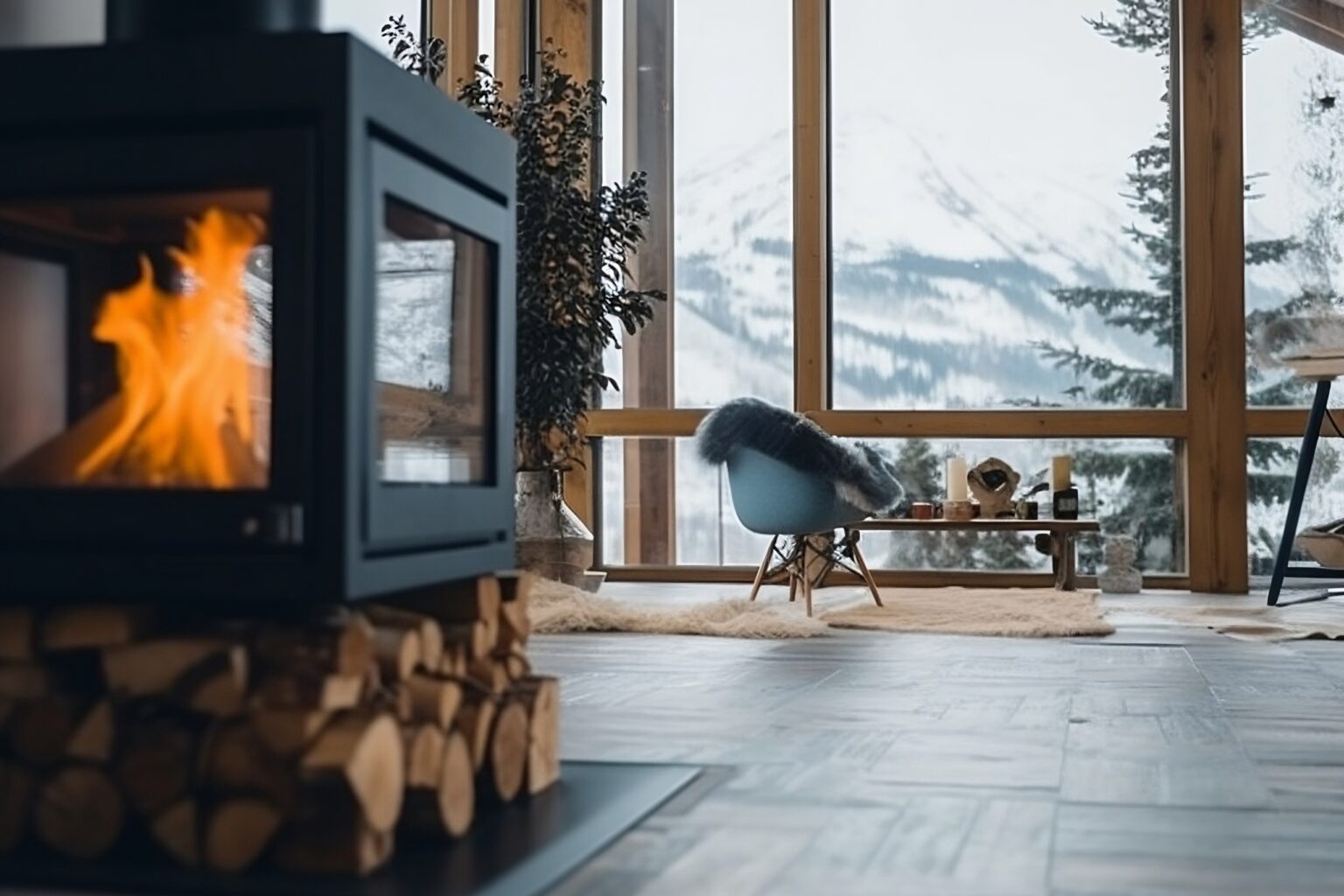
For many people, having a fire in their own home holds a special appeal. A wood-burning stove in the living room, a traditional kitchen stove, or another type of fireplace creates a cozy atmosphere, provides warmth, and can become a true focal point in the home.
This raises a question that comes up frequently, especially when it comes to wood construction: Is it even possible to install a wood-burning stove in a modern wood house without any problems?
The clear answer is: Yes. A fire pit can generally be incorporated into a wood-frame structure—provided it is planned properly and as early as possible.
Planning and Technical Requirements
Wooden Construction and Fire Pits—Not a Contradiction
Modern buildings must meet high standards for energy efficiency, airtightness, and safety. These requirements generally apply regardless of whether a house is built using wood, brick, or concrete.
In wood construction , particular attention is paid to planning the necessary clearances and fire safety measures around stoves, flues, and fireplaces, as well as at penetrations through walls, ceilings, and roofs .
Anyone interested in a wood-burning stove or kitchen range should therefore bring this up early in the planning phase. That way, the chimney route, fresh air supply, fire safety, and the location of the fireplace can be properly integrated into the building from the very beginning.
Especially important: Combustion air from outside
Modern homes have a very well-insulated and airtight building envelope. That is precisely why a fire pit requires a properly designed, independent supply of fresh air from outside.
The combustion air required is fed directly into the firebox. The flue gases, in turn, are vented to the outside through the designated chimney. The fresh air supply, firebox, and flue gas exhaust must be precisely coordinated from a technical standpoint.
The indoor air itself should not be used as combustion air. This is particularly crucial for safe operation and to prevent hazardous exhaust gases from entering the living space.
Heating Requirements and Unique Features in Modern Residential Construction
A modern new building requires very little heating energy
From the perspective of Südtirolhaus , one of the most important investments when building a home. Good insulation of the roof, exterior walls, and floor, as well as high-quality windows, reduce energy consumption in the long term.
After all, while technical systems are eventually replaced, a well-designed building envelope lasts for decades.
However, this leads to an interesting effect: A modern wood-burning stove can quickly produce too much heat for a well-insulated room.
Modern heating systems typically use individual room control. For example, if the living room is heated by a wood-burning stove, the room thermostat detects the higher temperature and reduces or stops the normal heat supply.
However, unlike a modern heating system, the stove itself cannot simply be turned off with a thermostat. The wood in the stove continues to burn. As a result, the room can become too warm even when the heating is turned off.
When planning, therefore, you shouldn't just ask, " Which stove do we like?" It's just as important to ask, " What heating capacity actually suits the house and the room?"
Special Feature: Stove
A wood-burning kitchen stove has an added appeal: Not only can it provide heat, but it can actually be used for cooking and baking.
However, this requires bringing it up to the appropriate temperature. In a modern, very well-insulated building, this process simultaneously generates a considerable amount of heat in the room.
There is also another practical consideration: Cooking produces vapors, odors, and grease. The combination of the stove and the range hood must therefore be carefully evaluated from a technical standpoint.
A powerful range hood can create negative pressure inside a building. If a fireplace is in use at the same time—for example, in an open-concept kitchen—smoke from the fireplace must under no circumstances be drawn into the living area.
Fireplaces, chimneys, fresh air supply, ventilation, and range hoods must therefore be planned as an integrated system.
Cost-Effectiveness and Operations
And is a wood-burning stove worth the investment?
Anyone who considers a wood stove solely from an economic standpoint should do the math carefully.
In addition to the stove itself, there are costs associated with the chimney, the fresh-air supply, connections, necessary fire safety measures, and penetrations through walls, ceilings, or roofs. On top of that, there are costs for professional installation as well as regular inspection and cleaning of the chimney.
Depending on the design, this can quickly add up to several thousand euros. At the same time, a modern, energy-efficient home requires very little heating energy. An investment in a fire pit therefore often takes a very long time to pay for itself through the savings on heating costs.
Today, a wood-burning stove is therefore often less of an economic necessity and more of a conscious choice to create a certain atmosphere, a certain lifestyle, and the joy of a fire.
And that is, in fact, perfectly legitimate.
Firewood is also part of the planning
For those who enjoy cutting, storing, and burning their own wood, this work might even be part of the experience. Still, you shouldn't underestimate the effort involved.
Firewood must be purchased or prepared yourself, split, dried sufficiently, and stored properly. This requires a suitable, well-ventilated, and sheltered location. It’s also usually a good idea to set aside a small area in your living space for your daily supply of firewood.
Anyone who buys wood should consider not only the space required but also the ongoing fuel costs.
Conclusion from Südtirolhaus: A fire pit—yes, but plan it carefully
A wood-burning stove, kitchen stove, or other fireplace can be seamlessly integrated into a modern wooden house. Wooden construction in no way stands in the way of this desire.
What is crucial, however, is to consider the fireplace as part of the overall building design from the very beginning: from the fresh air supply and the chimney, through fire safety, to the heating control system and—in the case of open-concept kitchen-living rooms—the range hood.
From a purely economic standpoint, a wood-burning stove is not absolutely necessary in a modern, highly energy-efficient building. However, anyone who appreciates the fire, the special warmth, and the atmosphere of a stove should not have to do without it.
Our recommendation at Südtirolhaus: Include your desire for a fire pit in the planning process as early as possible. That way, the architecture, wood construction, and building services can be optimally coordinated from the very beginning.

